
MARSDAILY
Cyprus rocky testing ground for Mars
by Staff Writers
Nicosia (AFP) Nov 27, 2020

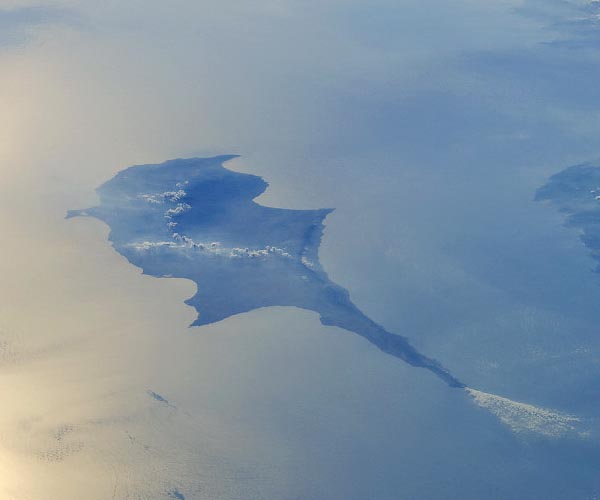
International and Cypriot experts on Friday discussed a research project to test space equipment on the Mediterranean island before sending it to Mars to measure the age of its rocks, officials said.

Planetologists and geologists arrived in Cyprus earlier this month to test out the equipment in the Troodos mountains, which officials say has geological similarities with the red planet.

The project is funded by the European Commission and on Friday a first meeting involving the Cyprus Space Exploration Organisation (CSEO) and the Geological Surveys Department got underway.

"The meeting discussed the objectives of the international space programme, the geological needs and the most suitable locations for the project," the government's Geological Survey Department said.

The rock-measuring project is "very innovative since there are no previous accurate measurements of the age of the rocks of Mars from previous missions", it added in a statement.

It noted however that "the geology of the Troodos Mountains has a lot in common with the rocks of Mars".

Acting director of the Geological Survey Department, Christodoulos Hadjigeorgiou, said Friday's meeting went well with local know-how of the landscape offered to international scientists.

The CSEO is taking part in a major international research project on Mars, in collaboration with three other European countries as well as the United States.

CSEO head George Danos said the space project "highlights once again the uniqueness of our country's geology, which can help prepare space missions to other celestial bodies".

"Through this cooperation we will create new jobs for scientists in our country and new research projects in collaboration with international space agencies," he added.


Related Links
Mars News and Information at MarsDaily.com
Lunar Dreams and more

MARSDAILY
Ancient zircon minerals from Mars reveal the elusive internal structure of the red planet
Copenhagen, Denmark (SPX) Nov 18, 2020
The uranium-bearing mineral zircon is an abundant constituent of Earth's continental crust, providing information about the age and origin of the continents and large geological features such as mountain chains and giant volcanoes. But unlike Earth, Mars's crust is not evolved and is compositionally similar to the crust found under the Earth's oceans, where zircon is rare. Therefore, zircon is not expected to be a common mineral on Mars. "We were quite surprised and excited when we found so many z ... read more

Comment using your Disqus, Facebook, Google or Twitter login.

Share this article via these popular social media networks
del.icio.usdel.icio.us DiggDigg RedditReddit GoogleGoogle

MARSDAILY
Lowell Scientists Help Characterize Second Known Minimoon

Yutu 2 rover still operating on far side of moon

China's 'space dream': A Long March to the Moon

Experts expect major contributions from Chang'e 5 lunar mission

MARSDAILY
Moon mission tasked with number of firsts for China

How it took decades for space program to take off

China to Begin Construction of Its Space Station Next Year

China's space tracking ship sails for Chang'e 5 mission

MARSDAILY
Scientists claim controversial results of comets observations are consistent

Western student first to spot asteroid speeding past Earth

CSIRO research vessel Investigator films meteor break up over ocean

SwRI scientists expand space instrument's capabilities

MARSDAILY
Swedish space instrument participates in the search for life around Jupiter

Researchers model source of eruption on Jupiter's moon Europa

Radiation Does a Bright Number on Jupiter's Moon

New plans afoot beyond Pluto

MARSDAILY
Impact craters reveal details of Titan's dynamic surface weathering

NASA Scientists Discover 'Weird' Molecule in Titan's Atmosphere

ALMA shows volcanic impact on Io's atmosphere

Interplanetary storm chasing

MARSDAILY
Over to you, Eumetsat

Teledyne e2v part of UK Collaboration to Develop Quantum Technologies to Measure Atmosphere

Satellite imagery used for electricity consumption forecasting in Africa for the first time in new service

ESAIL's first map of global shipping

MARSDAILY
Russia's Energia suggests building national space station

From capsules to cranberries, NASA helps keep Thanksgiving food safe

Home away from home planet

Equatorial Space Stations

MARSDAILY
Here's Looking at You, MKID

A terrestrial-mass planet on the run?

A planet-forming disk still fed by the mother cloud

New Interdisciplinary Consortium for Astrobiology Research