
Mars Exploration News
MARSDAILY
Curiosity And Perseverance Rovers Reveal Opposite Ends Of Mars Ancient Past
illustration only

Curiosity And Perseverance Rovers Reveal Opposite Ends Of Mars Ancient Past

by Clarence Oxford
Los Angeles CA (SPX) Apr 27, 2026
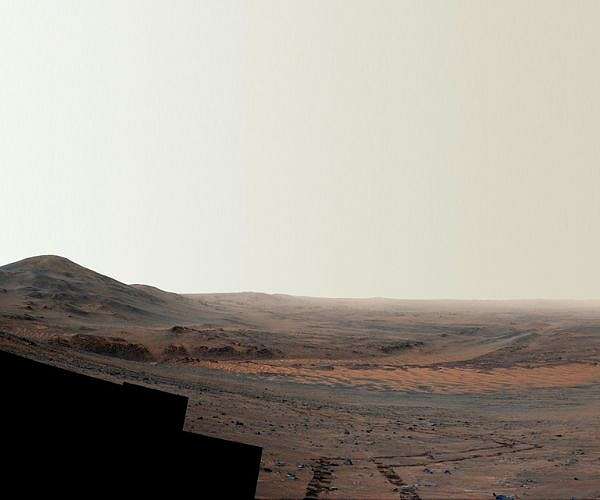
NASA's two active Mars rovers have each assembled sweeping 360-degree panoramas from opposite sides of the planet, together painting a portrait of Mars that spans billions of years of geological and climatic history. Separated by 2,345 miles (3,775 kilometers) - roughly the overland distance between Los Angeles and Washington, D.C. - Curiosity and Perseverance are simultaneously probing two very different eras of Martian time.

Curiosity's panorama, stitched from 1,031 images acquired between Nov. 9 and Dec. 7, 2025, surveys an expanse of boxwork formations - low ridges that resemble giant spiderwebs when viewed from orbit. The ridges were sculpted by ancient groundwater that percolated through fractures in bedrock, depositing minerals that hardened and resisted later erosion. At 1.5 billion pixels, the image ranks among the largest panoramas the rover has ever produced.

Perseverance's panorama centers on a location the science team has nicknamed "Lac de Charmes" a site outside the rim of Jezero Crater. The mosaic was built from 980 images collected between Dec. 18, 2025, and Jan. 25, 2026, capturing the Jezero rim and the ancient surrounding terrain in a full 360-degree sweep.

Curiosity touched down on Gale Crater's floor in 2012 with the primary objective of determining whether Mars once offered conditions capable of supporting microbial life. Within its first year, a drilled sample from an ancient lakebed confirmed those conditions had existed, including the appropriate chemistry and potential nutrients.

Since 2014 the rover has been climbing Mount Sharp, a peak that rises 3 miles (5 kilometers) above the crater floor. The mountain's layered sediments record a succession of ancient lakes followed by periodic returns of streams and ponds during drier epochs. Because lower layers are older, the rover effectively moves forward in geological time as it descends the mountain and backward as it climbs - though the team notes it is currently ascending toward younger terrain.

Recent findings from the Curiosity mission include evidence that the mineral siderite may be sequestering carbon dioxide that once contributed to a thicker early Martian atmosphere. Scientists had long suspected carbonate minerals formed when carbon dioxide dissolved into ancient lakes, but confirmed deposits had rarely been identified before.

The mission also announced the detection of three of the largest organic molecules yet found on Mars - long-chain hydrocarbons possibly representing remnants of fatty acids - recovered from a sample drilled in 2013. Most recently, analysis of a rock drilled and sampled in 2020 yielded the most diverse collection of organic molecules ever identified on the Red Planet, with 21 carbon-containing compounds detected, seven of which had never previously been found on Mars.

Perseverance arrived at Jezero Crater in 2021 to study the origin of the crater's ancient rocks and to search for signs of past microbial life. The crater floor solidified from molten rock billions of years ago, after which a river fed a lake within the crater and deposited sediments that could potentially preserve biosignatures. In 2024 the mission examined a rock nicknamed "Cheyava Falls," which displayed distinctive "leopard spot" patterning - a type of chemical signature associated with microbial activity in terrestrial rocks.

Unlike Curiosity, which pulverizes its rock samples for on-board chemical analysis, Perseverance collects intact rock cores approximately the size of a piece of blackboard chalk and seals them in metal tubes. The rover currently carries 23 samples on board, with a separate backup set of 10 tubes deposited at a dedicated sample depot. Scientists intend to return these samples to Earth-based laboratories, where they can be studied with instruments far more powerful than those aboard the rover.

Perseverance has also produced results beyond geology and astrobiology. In the fall of 2025, mission scientists published the first recordings of electrical sparks generated inside passing dust devils - a phenomenon that had previously only been theorized. A separate investigation demonstrated that one of the rover's sensitive cameras captured the first visible-light auroras ever observed from the surface of another planet.

Both missions are now advancing toward new objectives. Curiosity has moved on from the boxwork region and is exploring a sulfate-enriched layer of Mount Sharp. Perseverance is heading toward a region called "Singing Canyon," which the team expects to hold some of the oldest terrain accessible anywhere on the planet.

Related Links
Jet Propulsion Laboratory
Mars News and Information at MarsDaily.com
Lunar Dreams and more

Subscribe Free To Our Daily Newsletters
RELATED CONTENT
The following news reports may link to other Space Media Network websites.
MARSDAILY
Fungal Spores From NASA Cleanrooms Survive Simulated Mars and Space Travel Conditions
Los Angeles CA (SPX) Apr 23, 2026
Scientists have long recognized the resilience of fungi, but a new study demonstrates that certain strains may be capable of surviving every stage of a mission to Mars - from spacecraft assembly through the journey to the Martian surface. Researchers isolated fungal microbes from NASA cleanrooms, the controlled facilities used for the assembly, testing, and launch of spacecraft. These fungi had persisted in the cleanrooms despite standard decontamination procedures. When the researchers subjected ... read more

MARSDAILY
Chickpeas grown in simulated moon soil reach harvest

Astrobotic and CMU advance distributed nav system for Moon missions

Astrobotic to build lunar wheel for Italian habitation module

Lunar Dust Transformed Into Structural Reinforcement for Moon Base Construction

MARSDAILY
Dragon spacecraft gears up for crew 12 arrival and station science work

MARSDAILY
Interstellar Comet 3I/ATLAS Reveals a Birthplace Far Colder Than Our Solar System

Ingredients of life discovered in Ryugu asteroid samples

Webb observations confirm safe lunar pass for asteroid 2024 YR4

Ryugu samples record early solar system magnetic fields

MARSDAILY
Ocean Wave Mechanics Across the Solar System and Beyond

Jupiter size refined by new radio mapping

MARSDAILY
Dragonfly Structure Takes Shape as Parachute and Chemistry Lab Tests Advance

Titan may have formed in a giant impact between ancient Saturn moons

Enceladus waves shape Saturn space weather

MARSDAILY
PlanetiQ Wins 15 Million Dollar Air Force STRATFI Deal for Next-Gen Space Weather Data

UK and Saudi partners design climate focused Earth observation mission

LizzieSat 3 hosts HEO USA non Earth imaging payload in orbit

ASII launches national geospatial digital twin for Australian agriculture

MARSDAILY
Nine European Students Complete Six-Day Simulated Mars Mission in Portugal

China's First Commercial Space Standards Aim To Cut Costs and Unify Industry

Full scale Space Rider test craft set for parafoil glide trials

Meet the four astronauts set to voyage around the Moon

MARSDAILY
Tectonic cycling may return buried seafloor microbes to life

Three-Body Exoplanet System TOI-201 Caught Changing Its Orbital Architecture in Real Time

Desert Worlds in Habitable Zones Unlikely to Support Life Without Sufficient Surface Water

JWST reveals water-ice clouds on a cold Jupiter-mass world

Subscribe Free To Our Daily Newsletters


The content herein, unless otherwise known to be public domain, are Copyright 1995-2026 - Space Media Network. All websites are published in Australia and are solely subject to Australian law and governed by Fair Use principals for news reporting and research purposes. AFP, UPI and IANS news wire stories are copyright Agence France-Presse, United Press International and Indo-Asia News Service. ESA news reports are copyright European Space Agency. All NASA sourced material is public domain. Additional copyrights may apply in whole or part to other bona fide parties. All articles labeled "by Staff Writers" include reports supplied to Space Media Network by industry news wires, PR agencies, corporate press officers and the like. Such articles are individually curated and edited by Space Media Network staff on the basis of the report's information value to our industry and professional readership. Advertising does not imply endorsement, agreement or approval of any opinions, statements or information provided by Space Media Network on any Web page published or hosted by Space Media Network. General Data Protection Regulation (GDPR) Statement Our advertisers use various cookies and the like to deliver the best ad banner available at one time. All network advertising suppliers have GDPR policies (Legitimate Interest) that conform with EU regulations for data collection. By using our websites you consent to cookie based advertising. If you do not agree with this then you must stop using the websites from May 25, 2018. Privacy Statement. Additional information can be found here at About Us.